
Where Bulgaria meets balneo
Spa Holidays in Bulgaria's Thermal Towns
From mineral springs and thermal baths to spa hotels and free public pools — Bulgaria is Europe's best-value wellness escape, in your language.
Our mission
The honest guide to Bulgaria's thermal wellness
Bulgaria has more mineral springs than almost anywhere in Europe — yet for international travellers it remains a hidden corner of the wellness map. We gather the country's thermal towns, hotels and free public baths into one clear, multilingual resource, written like advice from a trusted local friend.
Where to go
Bulgaria's thermal map
From the Rhodope Mountains to the Roman springs of the Thracian plain, mineral water surfaces across the country. Explore the towns that have built a wellness tradition around it.
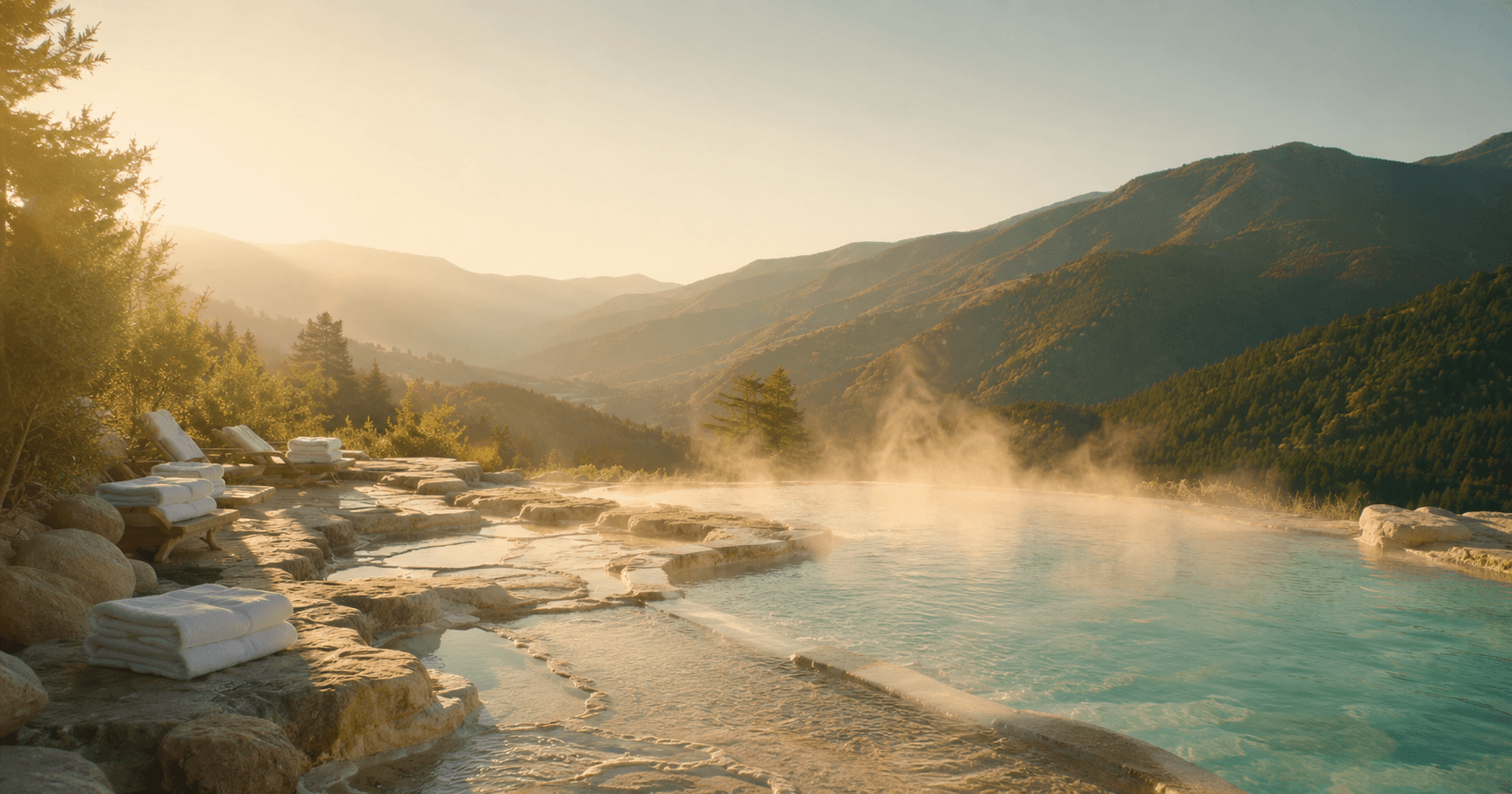
Why Bulgaria
A 2,000-year balneo tradition, still remarkably affordable
Balneotherapy — the use of natural mineral water to treat and prevent illness — has been practised on Bulgarian soil since Thracian and Roman times. Today the country counts more than 600 springs, with waters rich in fluoride, silicon, sodium and radon.
What sets Bulgaria apart is value: comparable treatments and thermal hotels cost a fraction of those in Western or Central Europe, in settings ranging from pine-clad mountains to ancient Roman spa towns.
- 600+
- mineral springs
- 22–103°C
- water temperatures
- 2000+
- years of spa heritage
Destinations
Bulgaria's thermal & spa towns
In-depth guides to Bulgaria's leading thermal towns — their mineral springs, spa hotels, treatments and how to get there.

Sofia (Sofia City)
Bankya
15 springs
Bankya is Sofia's spa town — a leafy resort suburb on the city's western edge, just 17 km from the centre, long prized for gentle thermal water and clean mountain air. It is best…

Rhodope Mountains (Smolyan Province)
Devin
6 springs
Devin is Bulgaria's mineral-water capital. The name is on bottles across the country, and the town that supplies it sits deep in the Rhodope Mountains, wrapped in forest, gorges…

Pirin / Blagoevgrad Province (near Bansko)
Dobrinishte
17 springs
Dobrinishte is where you ski and soak. This small town on the north-eastern slopes of the Pirin mountains, just 6 km from the Bansko ski resort, has 17 mineral springs and a…

Plovdiv Province
Hisarya
22 springs
Hisarya is Bulgaria's Roman spa town — and unusually, the spa and the history are the same story. People have come here to drink and bathe in the mineral water for nearly two…

Kyustendil Province (SW Bulgaria)
Kyustendil
40 springs
Kyustendil is one of Bulgaria's oldest — and least commercialised — spa towns. Set in a fruit- growing valley near the Macedonian and Serbian borders, it has been a bathing town…

SW Rhodopes / Mesta valley (Blagoevgrad Province)
Ognyanovo
9 springs
Ognyanovo is the Rhodopes' open-air soak. This small spa village in the Mesta valley is best known for its outdoor mineral pools — steaming in the mountain air — and for being one…

Pirin / Blagoevgrad Province (SW Bulgaria)
Sandanski
16 springs
Sandanski is Bulgaria's warmest town — and its most famous climatic cure. Tucked into the southern foothills of the Pirin mountains near the Greek border, it enjoys a…

Rila / Kyustendil Province
Sapareva Banya
15 springs
Sapareva Banya has continental Europe's only geyser — a column of 103 °C mineral water that shoots up to 18 metres into the air. It is the hottest mineral water in Bulgaria, and…

NW Bulgaria / Stara Planina (Montana Province)
Varshets
6 springs
Varshets is one of Bulgaria's oldest and gentlest spa towns. Set at the foot of the western Stara Planina (Balkan mountains) in the country's quiet north-west, it has welcomed…

Rhodope Mountains
Velingrad
90 springs
Velingrad is the spa capital of the Balkans — and the title is earned, not marketing. More than 90 mineral springs rise in and around this small town in the western Rhodope…
Latest
From the journal
Guides, comparisons and practical advice for planning a thermal wellness trip to Bulgaria.

October 8, 2026
Hot Springs in Bulgaria: The Free & Wild Bathing Guide
Bulgaria has more than 600 mineral springs — and while most now feed hotels and bath houses, a handful still flow exactly as they have for thousands of years: hot, free and open…

June 20, 2026
Best Thermal Spas in Europe: A Comparison by Water & Experience
Europe gave the world the word "spa" — from the Belgian town of Spa — and it remains the richest continent for thermal bathing, from Roman springs still plumbed for hot water to…

June 20, 2026
Spa in Bulgaria: The Complete Guide to Thermal & Balneo Tourism
Bulgaria is one of the richest thermal countries in Europe — and one of the least known. With more than 600 mineral springs, a balneo tradition stretching from the Thracians and…
Good to know
Spa holidays in Bulgaria — your questions answered
Is Bulgaria good for a spa holiday?+
Very. Bulgaria has more than 600 mineral springs and a 2,000-year balneo tradition, with thermal spa hotels and treatments at a fraction of Western European prices — plus many free public baths.
Where are the best thermal baths in Bulgaria?+
The leading thermal towns include Velingrad (the "spa capital of the Balkans"), Hisarya, Sapareva Banya — home to continental Europe's only geyser — Sandanski, Devin, Bankya and Kyustendil. See our destination guides for each.
How much does a spa holiday in Bulgaria cost?+
Far less than Western or Central Europe. A night in a good spa hotel can cost less than a single spa entry elsewhere, and many public mineral baths are free or just a euro or two.
What is balneotherapy?+
Balneotherapy is the use of natural mineral water — by bathing, drinking or inhalation — to treat and prevent illness. It is the medical tradition behind Bulgaria's thermal resorts and sanatoriums.
Can you use Bulgaria's mineral baths for free?+
Often, yes. Most thermal towns have free or low-cost public mineral baths and drinking fountains, and many spa hotels sell day passes to their thermal pools.
Plan your Bulgarian thermal escape
Discover Bulgaria's thermal towns and the hotels, springs and treatments that make each one worth the trip.